Toxic masculinity isn’t just your dad’s bad habit anymore, it’s sliding into DMs, hiding in emojis, and fueling red-pill talk at an alarming rate. And guess what? The younger generation is eating it up.

Sorry for the long hiatus, I’ve been buried in work and study. But what finally dragged me back to my laptop was seeing that Stephen Graham won the Emmy for Outstanding Lead Actor for Adolescence, and Owen Cooper becoming the youngest male actor ever to win an Emmy for his supporting role as Jamie Miller.
It made me pull the film off the shelf again, not just as something to be watched, but as something that reflects back the masks people wear. Because this isn’t just a coming-of-age story, it’s a mirror. And sometimes mirrors show things we don’t want to see.
the film in focus: Adolescene
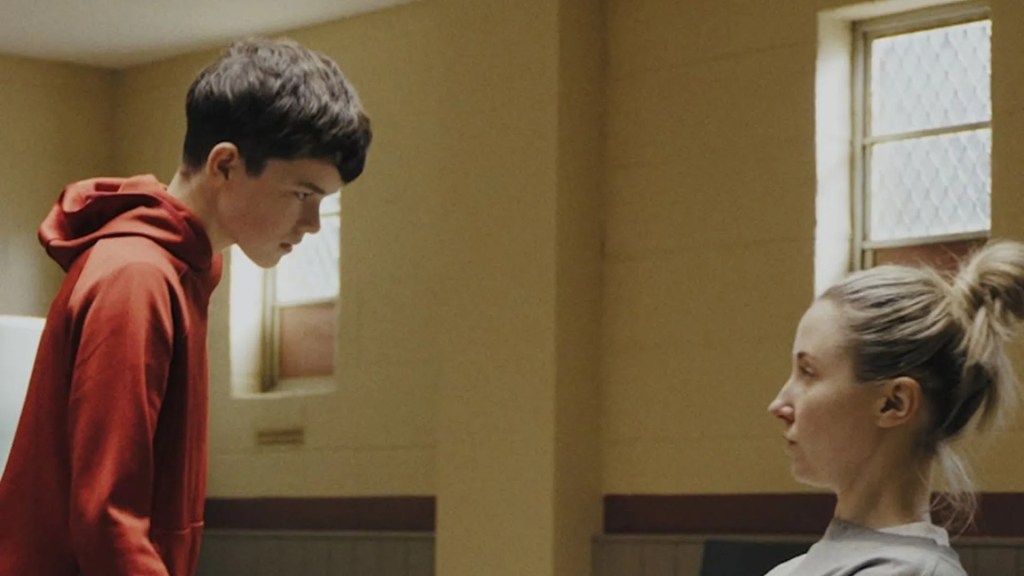
At its heart, Adolescence isn’t just about teenage angst. It’s about the slippery mask of “nice guys,” how charm and affection can serve as currency until rejection breaks the illusion. The film centers on Jamie (Owen Cooper, who at just 14 stunned the industry with his BAFTA-nominated performance), a boy who navigates friendship, first love, and the intoxicating power of attention. Alongside him is Graham’s character, a mentor who oscillates between vulnerability and menace, teaching Jamie, and us, that “niceness” isn’t always neutral.
From the first scenes, the film lures you in with gentleness: Jamie’s awkwardness, Eddie’s attempts at connection, the way they all reach out looking for something real. But when expectations are unmet, when affection is withheld, when the fantasy of love or respect isn’t returned, the cracks start showing.
A smile becomes forced. A compliment becomes a demand. The film doesn’t shy away from how entitlement can masquerade as devotion.
toxic masculinity and entitlement
That’s why Adolescence hits harder than your average teen drama. It doesn’t romanticize the crush-gone-wrong or tidy up the messy ending. Instead, it dares to show what happens when a boy’s identity is so tied to conquest or validation that rejection feels like erasure. Eddie isn’t a villain in a cape he’s a man trying to hold it together, made fragile by the same systems that taught him to demand more than kindness. And Jamie, put in the middle, shows us how even innocence doesn’t shield you from being entangled in toxic expectations.
What intrigues me more is how the series threads in the modern language of toxic masculinity. There’s a sharp little detour where characters invoke red pill vs. blue pill discourse pop-culture shorthand for entitlement disguised as awakening. Even the way Jamie or others text, emojis that begin playful, then twist into guilt, expectation, or passive aggression, shows how subtle these power plays have become. Adolescence doesn’t just tell a story about rejection; it exposes the coded ways boys and men are taught dominance, in group chats, meme culture, or in the fine print of what “being a man” means.
According to Psychology Today, toxic masculinity often arises when men believe “all good things would come to me because I deserved them,” a mindset rooted in entitlement rather than empathy. The article explains how this belief system turns kindness into an unspoken contract and relationships into transactions. It also shows that unlearning toxic masculinity means confronting that false persona and doing the difficult work of choosing integrity over expectation.
(Stein, S. (2018), Toxic Masculinity: What Is it and How Do We Change It?, Psychology Today.
The film lays those norms bare, not in abstract lectures, but in painfully real moments, a sarcastic jab here, a cold shoulder there, showing how small cracks reveal the system itself. And if you look closer, the signs of adolescent toxic masculinity today are everywhere:
✦ Friendliness as a mask: being “overly nice” only as a strategy to get attention, validation, or sex.
✦ Rejection rage: withdrawing affection, lashing out, or turning cruel when a romantic or sexual interest isn’t reciprocated.
✦ Red pill/blue pill thinking: framing women as obstacles, prizes, or enemies instead of individuals with autonomy.
✦ Emoji manipulation: using playful or flirty texting that shifts into guilt-tripping, passive aggression, or subtle emotional coercion.
✦ Entitlement disguised as empathy: acting supportive or kind, but only conditionally, with hidden expectations of reward.
✦ Meme culture reinforcement: sharing or laughing at jokes that normalize dominance, dismiss consent, or reduce women to stereotypes.
By weaving these signs into Eddie and Jamie’s world, Adolescence doesn’t just tell a story, it mirrors a generational crisis, one that is playing out in classrooms, group chats, and relationships everywhere.
horrifying true stories behind Adolescence
Before diving in, it’s worth clearing the air: Adolescence is not a direct retelling of any one real-life case. Stephen Graham, who co-wrote the drama with Jack Thorne, has stressed that while the series draws from a chilling rise in youth violence, it does not mirror a single tragedy.
✦ Ava White – Liverpool, 2021
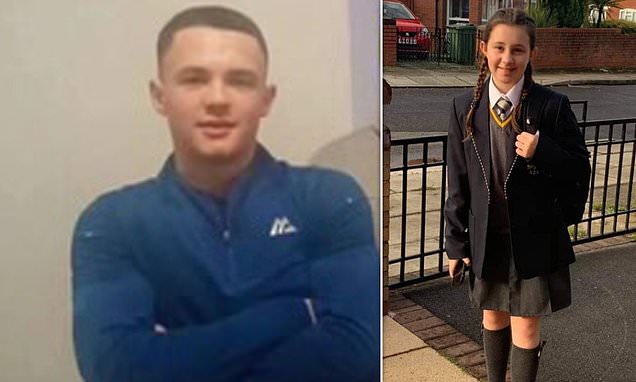
On November 25, 2021, 12-year-old Ava White was fatally stabbed in Liverpool city centre following a dispute over a Snapchat video. The altercation occurred after the Christmas lights switch-on event, when Ava and her friends were confronted by a group of boys who had filmed them. The situation escalated when one of the boys, 14-year-old Harry Gilbertson, stabbed Ava in the neck with a flick knife. He later claimed the act was in self-defense, stating he did not mean to harm her.
However, he was found guilty of murder and sentenced to life imprisonment with a minimum term of 13 years. The case highlighted how online interactions and the desire for validation can lead to tragic outcomes among adolescents.
✦ Brianna Ghey – Warrington, 2023

On February 11, 2023, 16-year-old Brianna Ghey, a transgender girl, was lured into Culcheth Linear Park by two 15-year-olds, Scarlett Jenkinson and Eddie Ratcliffe. Once there, she was brutally stabbed 28 times in a premeditated attack. The murder was described as exceptionally brutal, with elements of sadism and transphobia.
Both perpetrators were convicted of murder and sentenced to life imprisonment, with Jenkinson receiving a minimum term of 22 years and Ratcliffe 20 years before being eligible for parole. The case underscored the dangers of online radicalization and the deep-seated prejudices that can manifest in violent acts.
These cases collectively reflect the disturbing trend of youth violence fueled by digital interactions, entitlement, and a lack of emotional regulation. They serve as a stark reminder of the importance of addressing the underlying issues contributing to such tragedies and the need for comprehensive education and intervention strategies.
the personal cut: masks I’ve met offscreen
And this is where the film bled into my own life. Watching Jamie’s story, I couldn’t help but see the faces of men I’ve met offscreen, men who wore the same polished, friendly mask. The ones who held doors, remembered birthdays, sent good-morning texts, and made you laugh until your ribs ached. They presented themselves as allies, as safe spaces, as the kind of friends who insisted they “just wanted you happy.” But behind that curated kindness was often a different script, one written in invisible ink: friendship as a down payment for intimacy.
The cruelest irony? The ones who were “friendly to get into pants” often were the friendliest. They were patient, almost saintly in their restraint, disarming in their generosity. They played the long game, the late-night calls, the supportive pep talks, the kind of listening ear that made you think, “Finally, someone who just gets me.” But every kindness had a hidden invoice. And the second it became clear that romance wasn’t on the menu, that invoice arrived in the form of silence, sarcasm, or outright hostility.
I’ve lived through those shifts like whiplash. One day, you’re the “amazing friend” who deserves the world; the next, you’re “cold,” “selfish,” or “leading him on.” Smiles hardened. Words, once drenched in warmth, became cutting, transactional, even cruel. The same man who once praised your independence suddenly accused you of arrogance. The same one who encouraged your boundaries began punishing you for daring to enforce them.
That’s the thing about masks, they don’t just fall, they shatter. And when they do, the person underneath looks almost unrecognizable. It feels less like betrayal and more like waking from a dream, realizing the person you thought you knew was never really there at all. What hurts isn’t just the loss of the “friendship,” but the revelation that the friendship itself was a façade, a carefully staged performance built on expectation.
This, to me, is the beating heart of Adolescence. Because what I’ve learned, the hard way, is that entitlement isn’t always loud. Sometimes it’s soft, sugar-coated, wrapped in laughter and “I just care about you.” Sometimes it’s emojis and patience and inside jokes, until suddenly it isn’t. Until suddenly, your refusal to return the feeling is treated not as a choice, but as a betrayal. And that shift, from kindness to cruelty is the clearest proof that the kindness was never real.
The betrayal doesn’t just sting; it exposes the architecture of modern masculinity. How boys are taught that friendship is a waiting room for sex. How men are conditioned to see “no” not as a boundary but as a challenge. How rejection is recast as humiliation, something to be avenged rather than accepted. These aren’t isolated incidents; they are echoes of toxic norms that train men to equate affection with entitlement and kindness with currency.
So when I say I saw myself in Adolescence, I don’t mean in Jamie or Eddie alone, I mean in the spaces between them, in the silences that follow rejection, in the way performance curdles into demand. Because offscreen, in my own life, I’ve been there: smiling politely while someone chips away at my boundaries with “niceness,” only to watch that niceness rot when it didn’t get its way. And that’s why this film lingers. Because it doesn’t just tell a story; it mirrors one.
So yes, Stephen Graham deserves his Emmy. And Owen Cooper’s win is historic, not just for his age but for the sheer rawness he brought to Jamie’s story. But more than the awards, what lingers in me is the truth the film dared to show: that “niceness” is often a disguise.
That rejection, when filtered through entitlement, can turn warmth into venom. And that sometimes, what we mistake as love or loyalty was never about us at all, it was about control.
breaking the ‘they’re just boys’ excuse
Watching Adolescence, I thought about how often I hear people dismiss toxic masculinity as an outdated relic, when in truth it’s mutating, thriving, and showing up in the lives of the younger generation at an alarming rate. It doesn’t march in with brute force anymore; it slides in through Discord chats, lurks in red-pill TikToks, hides behind ironic memes and emoji-coded messages that normalize entitlement. And the most chilling part? Teenagers are consuming it like culture, mistaking it for confidence, authority, or even love.
That’s why this film feels less like a coming-of-age story and more like a warning flare. It reminds us that entitlement doesn’t arrive with a label, it arrives disguised as encouragement, solidarity, and even humor, until you realize the punchline was written at your expense. This is the new curriculum of toxic masculinity: digital, casual, and dressed in the language of intimacy. And if we don’t intervene, we’re letting a generation rehearse scripts of harm under the guise of connection.
Because here’s the uncomfortable truth: this isn’t just about individual men failing, it’s about cultural failure to educate. When boys are taught that kindness is a transaction, that rejection is humiliation, that dominance equals worth, we hand them a worldview that crumbles the moment they meet resistance. And when resistance comes, as it always does, it doesn’t just bruise their egos, it exposes the lie that their value was ever tied to control.
So when I applaud Adolescence, I’m not just applauding the performances (though Graham and Cooper pierced straight through me with their honesty). I’m applauding the urgency of the conversation it sparks, that what we are seeing is not isolated, it is generational, and the responsibility lies in unteaching what society so carelessly handed down.
Because here’s the note I want to leave you with, darling: education is not optional anymore, it’s survival. We need to teach boys that rejection is not cruelty, it’s clarity. That respect is not negotiable, it’s the foundation. And that intimacy without equality is not intimacy at all, it’s manipulation.
No, in this context, is not rejection. No is redirection. And if we do this work, if we start early, if we stay honest, no can become the most powerful education of all: one that guides us away from entitlement, and toward respect, reciprocity, and real love.
—
Your anti-masculine fragility princess,
Madam Alias Solis
Writer, The Modern Heiress

 ✦ The Modern Heiress
Leave a comment